Why Your Business Emails Are Going to Spam (And How to Fix It)
Spam Filter Functionality
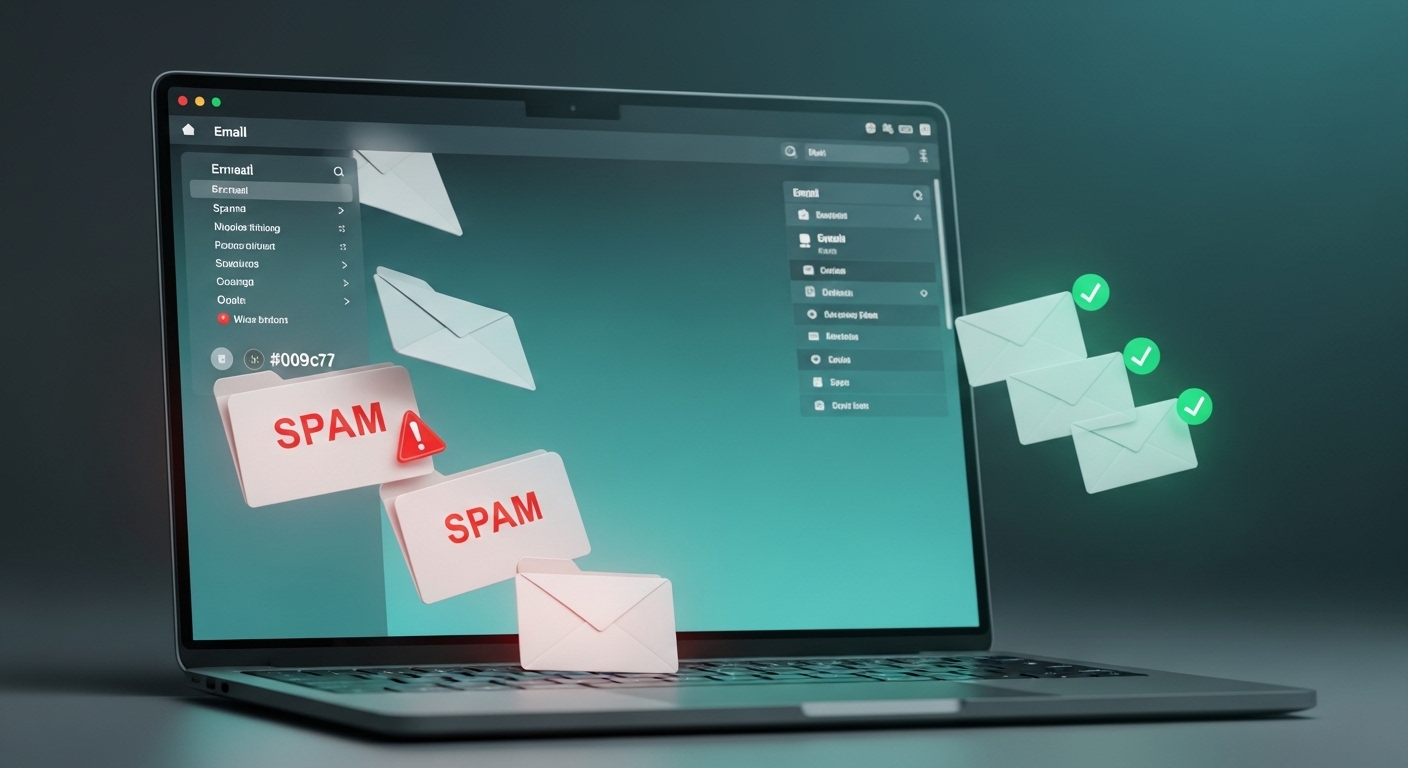
Spam filters provide email users a first-line defense against unwanted and potentially dangerous email. These handy pieces of software have advanced greatly with improved machine learning, but still use certain patterns and algorithms to determine what email to send to someone's inbox, and what to send to spam. Knowing this information may help businesses reach their recipients.
Email providers often use heuristic and Bayesian email filters. Heuristic filters look for patterns associated with spam. Bayesian filters look at probabilistic patterns based on a sender's behavior and their relationships with the email recipient to identify unwanted email.
Spam and content email filters look at certain factors when determining the credibility of a sender which is done by looking at the frequency of emails sent, rate of reported emails sent, and the number of recipient complaints reported. Most email providers have developed their filters to accurately determine spam so it remains granular. Email filters often look to see if the sender is associated with a reputable email domain, and if their email is authenticated through the use of SPF, DKIM, and DMARC.
These deliverability criteria are vital for businesses seeking ways to enhance their email deliverability. Many organizations have adopted several email marketing best practices. Some of those practices include modern criteria of hygiene to draft a mailing list, personalization, welcomed content, compliance with sender authentication, and so on. Thus, firms can enhance their reputation as a sender, and their emails can be successfully delivered to the inbox of the receivers.
Reasons emails go to the Spam folder.
It is no doubt that emails are the mainstay of modern communication. It’s also difficult to avoid emails going to the spam folder. A significant number of emails sent by businesses are genuine, but they still go to the spam folder. If a business seeks ways to enhance its email deliverability, it must look for the compelling logic as to why it’s happening.
Poor cleaning and maintenance of email lists is another compelling logic for why it’s happening. Businesses that have little or no faith to regularly rapture inactive and non-interested subscribers damage their email metrics. Metrics such as high or poor engagement send a signal to email service providers as to why the email can be categorized as spam.
Likewise, little or no invitation is another compelling reason for why the email may be categorized as spam. Email service providers have the prerogative to examine the invitation by the recipient. If the recipient deletes such an email without opening it then the from goes address compromised goes to the spam folder. If such behavior is repeated then the email will go to the spam folder. Engaging content can help enhance deliverability.
If you use words and phrases commonly found in spam emails, they could easily place your email in your recipients’ spam folders. Spam filters are sensitive to exaggerated, promotional emails full of excitement. Words like “guaranteed” and “free” are also struggling. So, consider using emails that are clear and professionally written to words that are directly relevant to add some risk mitigation to the campaign.
Another thing to consider are the technical factors that dictate your email’s deliverability. Unauthenticated sender, unhinged DMARC records, or poorly designed SPF records could cause your email to fall on the negative side of the spam filter. Keeping your technical factors in check will promote the success of your emails to reach the inbox.
Understanding these issues and how to fix them will help your campaigns succeed in reaching consumers.
Improving Email Deliverability
Improving your communication with consumers and clients relies heavily on reaching their inboxes. Thankfully, there are a couple of ways to reduce the chances of your email campaign landing in spam. One of the great ways to get a handle on spam issues is a well-supported subscriber list. Regular list cleaning makes for a highly relevant list. Keeping in touch with your subscribers and encouraging some to disable their emails will improve your email’s reputation and improve the email’s deliverability.
An important aspect of ensuring successful delivery is improving your email content. One of the easiest ways to be marked as spam is a failure to distinguish your email from the thousands of promotional messages received daily. Avoid placing excessive punctuation, misleading subject lines, etc. Instead of a typical promotional message, include only information that may be of interest to your readers. Assume the reader has a lot of information to process, so incorporate a clear and simple message that may be bulleted for easy reading. Finally, a more personalized message that appears to be in the form of a conversation is ideal.
In addition to optimizing content, ensuring that your emails are as trusted as possible by recipients is equally crucial and can be achieved through the proper use of email authentication protocols. Of note, setting up SPF, DKIM, and DMARC improves the trust that your emails will be authentic. In addition, specifying that your emails have been authenticated will improve the likelihood of your emails passing through spam filters.
Using all of these best practices, your email campaigns will have a much more successful chance of landing in inboxes, and more importantly, landing in the trusted sections. More importantly, your recipients will have a much stronger engagement with email communication, improving your communication policy for the better.
Monitoring and Analyzing Email Performance
In the digital world, every business should pay attention to their email performance. It is essential to monitor the performance and the effectiveness of emailers and locate the potential reasons for the emails going into the spam folders. Bounce rates, open rates, and CTR rates serve as fundamentals for the emailers that are sent. Their analysis and metrics are necessary to decide on needed improvements for email deliverability.
Bounce rates serve as the basics for performance of the emails. A high bounce rate means a considerable number of emailers sent are not reaching the intended recipients. A lot of things can fall into that category, such as email lists not being up to date or even the formatting of the email being incorrect. If the businesses monitor bounce rates and recognize the triggers for the high rates, they can better their strategies for communication.
Open rates represent a percentage of people that received and opened the email. Closed emails imply lack of interest to the point to which people may have not even opened the emails to know. Closed emails may mean that the subject lines and emailers are not appealing to the readers. The timing of the emails can also be a potential problem. Businesses can try different subject lines as well as different sending times in order to boost the open rates.
Also, click-through rates measure how people engage with the material in emails (typically modeled from email opens). High click-through rates often show that emails are sonically attractive and that readers are willing to engage with the emails at a deeper level. If the data doesn't show a desirable level of engagement, adjustments to the messaging, call to action, and email content may be included for that purpose.
This part of the discussion of analytics is immensely simplified with the right tools. In this case, both email marketing solutions and Google Analytics (primary web analytics tool) can tell the business what, how many, and when people interacted with the emails and content. Email marketing systems will tell you how many people clicked the emails links. This is essential data for implementing strategies to maximize email deliverability and engagement.