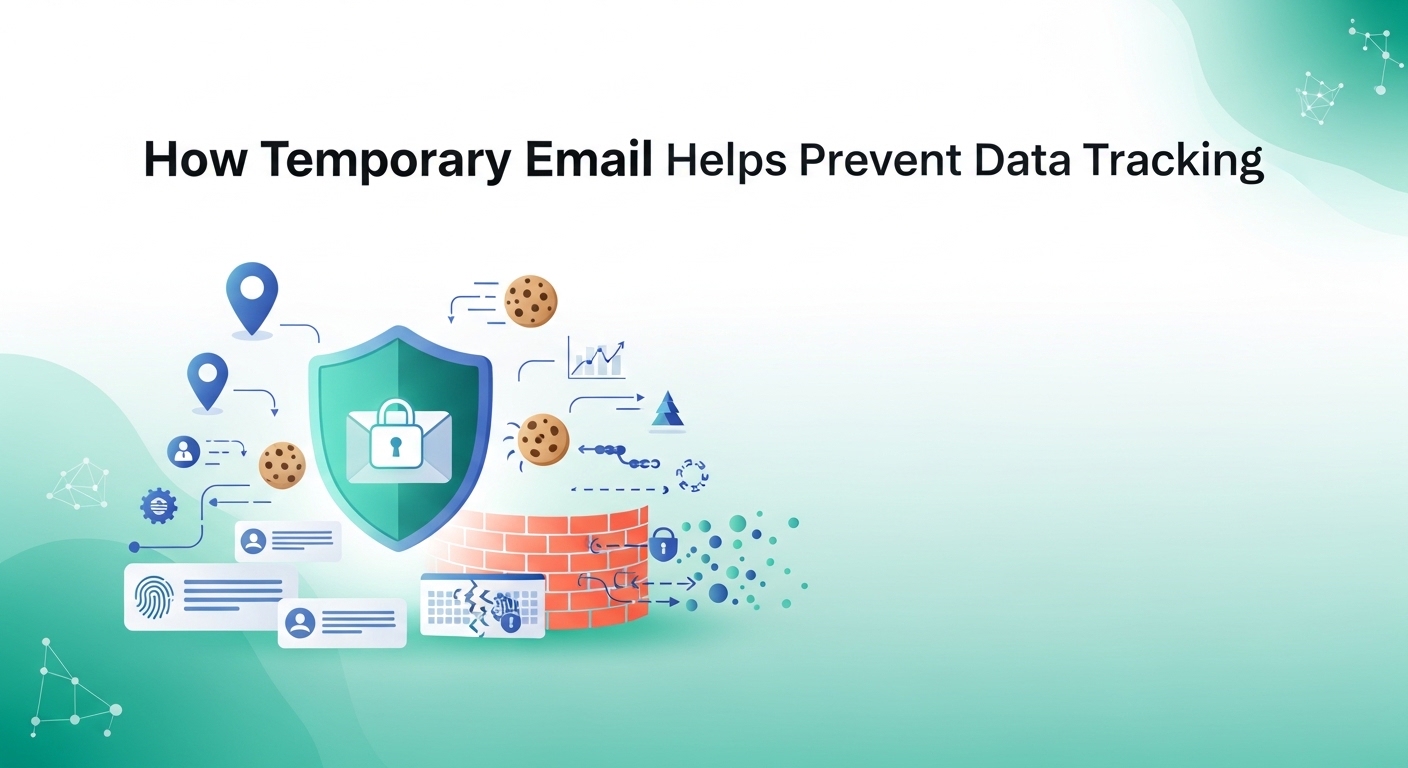
How Temporary Email Helps Prevent Data Tracking
The Use of Temporary Emails.
Temporary emails (or disposable emails) can be created for short periods of time. They can last anywhere from a few minutes to several day depending on need. You get a temporary inbox. You can also delete it easily when you think you have gotten what you need from it. They can be created quickly and do not require personal information.
Temporary emails can be used to be more anonymous when registering on websites. They can help you get through the registration screen while protecting your information. Marketers and companies won’t have your info. Once your temporary inbox has served it’s purpose you can delete it to save yourself the spam.
Temporary email services are versatile and specialized for different functions. For example, Guerrilla Mail and 10 Minute Mail will issue an email address that will expire after a limited time. In contrast, Temp Mail allows you to make a throwaway email to use as many times as you want. This is less time-sensitive than the previous services, but provides the same level of privacy. These services are useful for registering for a service that requires email verification for the free trial, for circumventing paywalls, and for engaging in discussion forums.
The Ways in Which Companies Track Data
Tracking users is important for a company to understand what their users are doing and how they are using their service to make things better for their users. Out of the many ways companies collect data on their customers, the most prevalent are cookies. Cookies are small bits of data that get saved to the user’s computer when they visit a website, while the user is there the website can store information about what the user is doing or what they're interacting with. This is how companies create a more personalized service. However, when the user is willing to surrender their data for a more personalized experience, it is important to understand that the users’ data will now be accessible by any partner the company works with.
Tracking pixels are mostly even smaller than an inch, embedded in emails or on a web page, and track the digital moves of a user. When a user interacts with an email or webpage containing a tracking pixel, the pixel provides the sender with the user's IP address, what device the user is on, when the email was opened, and some form of user engagement. This form of tracking is a method of marketing analytics, which is an analysis and evaluation of user engagement in an email for the improvement of marketing efforts. This tracking blurs the user and company relationship and remains unchecked.
Further, companies track users even more with email. With tracking pixels, users signing up for emails provides companies with a limitless way of segmentation. Tracking pixels allow companies to build segmented lists of users with the intent to market more targeted advertisements to users. The emails users subscribe to inform the companies of user engagement and what more advertisements the companies interject to users. This provides email lists with a segmented, targeted money market trap for users.
This is even more exemplified when a user purchases a product. The simple purchase of an item drives segementation efforts even more. The email the user is sent post-purchase of the item adds them to an email list for that specific store or company. Tracking pixels and a new method of segmentation is and effort of user segmentation to a greater monetary value. This provides companies more targeted advertisements to users via email.
How Temporary Emails Help You Stay Private
Almost all of us use email on a daily basis for both business and personal communication. As the world places more and more trust in email, the lack of privacy has caused a lot of problems. Keeping your privacy while using an email service has become an evolving challenge. What is the answer? Temporary emails.
For Privacy, Nothing is Better than Temporary Email
Once you've created a temporary email, it's as if you've created an alias for your email. This is extremely useful on the internet, especially when registering for websites in order to avoid those websites from gaining too much of your data.
Better Control Over Junk Mail
Almost all websites that require an email to login, will send you junk mail. Given the temporary address, you can avoid junk mail and promotions from cluttering your email address.
Data leaking is an increasing concern due to data breaches. Thankfully, disposable email services can help. With disposable email services, users can safely register for trials and use services without their main email. This is an incredibly valuable tool when users want to access the service, but don’t want to risk exposing their data.
Temporary email addresses have multiple practical use cases. One example is the creation of accounts on e-commerce sites, forums, sites for software testing, and even sites that require account creation before accessing the service. With these services, users can safely offer their emails and know that their email address will not be exposed to users in forums and services where their email support is required.
Safety tips for Temporary Emails
With the help of temporary email addresses, users can improve their email safety and privacy. As such, there are a number of best practices that users should be aware of to make sure these services have the greatest impact on privacy. It is essential to first choose a quality temporary email service. There is a relatively great number of these services on a global scale, and many of them are of a good quality, use of good old reviews and even their history. But, when separate providers do not require users to disclose a great deal of personal information, these services should use encryption to ensure their users' safety.
You should think about the restrictions of temporary email addresses. These email addresses only temporary anonymity. They can only be used for a limited time. With that, they may not be the best choice for account verification emails. For communications that require a email exchange, you should think about temporary emails for less important, one-time communications only.
Temporary email services should also be used as a part of a privacy strategy. These services can be used with other privacy services like VPNs and secure web browser, provide more privacy and a lesser chance for your online data to be.
Lastly, temporary email services can provide a good balance between your anonymity and credibility. They should not be used with sensitive data like financial services or personal emails. The services should be used for less important communication exchanges like promotions and websites that have less to no regards for personal data.
If these recommendations are used, more people can actually appreciate the capability of these services and be somewhat safe in our world with limited privacy.