When Should You Use Temporary Email Instead of Your Real Email?
Temporary Email Explained
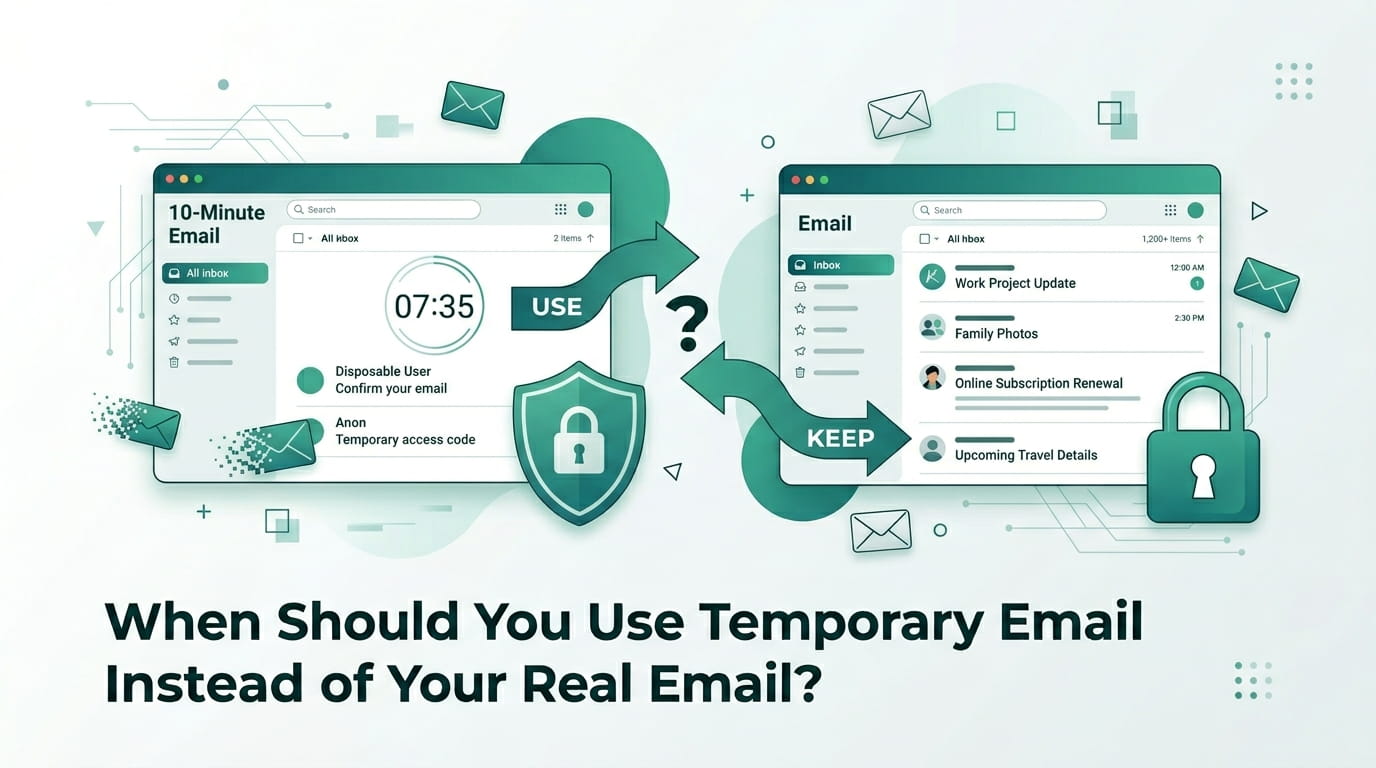
A temporary email address, also called a disposable email, can be used to communicate without giving out a primary email address. It is used for activities where some protection or anonymity is preferred. After a certain period of time, the disposable email address and all communications sent to it become immediately inaccessible.
A temporary email address works very differently than a traditional email address. If you got a Gmail or Yahoo email, you made a choice to get a long-term email and you have that email for a long time. Many people use their primary emails with their bank, for applying for jobs, and almost every other communication. Disposable emails are different. If you need to sign up for a site that requires an email or to get a confirmation code or to communicate and need to be private, a temporary email address is the solution.
There are a lot of advantages to using temporary email, but the main one is added anonymity. Avoiding the primary email address when using services that could result in spam protects users from a lot of phishing. For a lot of temporary email services, the creation process does not include the use of any personal data. The use of temporary email is beneficial if you do not want to use your email when cauting services that include future spam or when accessing websites that require you sign in. While temporary email addresses are a good choice, it does not involve a lot of direct communication, making it a bad choice when you require a permanent address to communicate personalized and important data.
How to Use a Temporary Email
There are a number of instances in daily life where the use of a temporary email is a lot more beneficial than using a permanent one. Normally, these situations include email address privacy, email address security, and spam email protection.
Everyone experiences the frustration that comes with signing up for a service and, as a result, providing the service with your personal email address. This usually results in a spam email assault on your main email. Using a temporary email for services that require you to sign in is a good way to avoid the spam that comes from the services that send advertising and promotional emails. This method is useful in protecting the permanent email account, as it reveals the user’s primary email address.
However, temporary emails can help you stay anonymous while downloading or accessing digital products. Most websites need at least one email address to gain access to certain downloads. You can use a temporary email to access products and not have to worry about other websites having your email address. Plus, you can also not have to worry about other websites sending you ads or other marketing emails to sell you things.
Having a temporary email address while engaging in a short term contract or collaboration can also be very beneficial. Keeping the upper hand within your contactable addresses while collaborating with others can be a challenge. By having a temporary email address, you can protect yourself and your collab partners' details. This is mostly helpful while you need to be in touch with a collab partner or temporary worker e.g. while doing a freelance task or market research where your privacy or the privacy of your collab partner can be at risk.
Ultimately, you can use a temporary email address whenever you need to sign up for something boring, like a list to get free products or access to exclusive digital goods. You can use a temporary email for collabs that don't last long.
Benefits of a Temporary Email Address
In a time when almost all business transactions are done online, security is a major concern. Temporary email addresses offer a convenient, simple, and affordable solution to some of the problems posed by online spam. Instead of a user’s real email being spammed, the temp email is spammed. Instead of real email overflowing with useless junk, the temporary email gets all spam.
Using a temporary email to sign up for online services protects real email addresses to some extent. It is more common to have a spam email address rather than an email that is disclosed and compromise the owner's personal information. Third parties and companies can do almost nothing with a temp email. Because the address is used for a limited period of time, it can’t be used to verify personal data, and the user’s information remains secure.
Temporary emails can offer protection against data leaks. Everyone is aware that personal information is virtually insecure when the emails, logins, and passwords are disclosed everywhere. When signing up for services of dubious legitimacy, using a temp email protects information.
In summary, the use of a temporary email address may offer many benefits, like added privacy, protection against spam, and prevention of possible data leak. Using these features may simplify the email user experience, as well as help the user have better personal data control as the world becomes more digital.
Pros and Cons
Temporary email services have a few cons, despite protecting user data and privacy and providing spam protection. One of the many cons that come with temporary email is the difficulty of account recovery. Registrants using a temporary email address, then lose access to that email address, may lose the account completely. Countries send recovery information to the account registration email address, and with that email being nonexistent, the user will be permanently locked out of their account.
Temporary email services are often subject to poor reliability as well. They may be subject to things like shut downs or server issues, causing temporary email providers to lose emails, and with that, the data of every user that relied on their services. Users relying on newer and unknown temporary email services are advised to be careful. Reputable providers offer service and data protection, and well-known temporary email services may be subject to similar risks.
Even though a temporary email address can protect your primary email address from spam, it is not the wisest option for long-term projects or email exchanges of importance. Some platforms or services may rely on a verification process or deliver updates that require a dependable email. In that case, a permanent email may be the best option. Weigh the above-mentioned factors to help your balance of preferences.