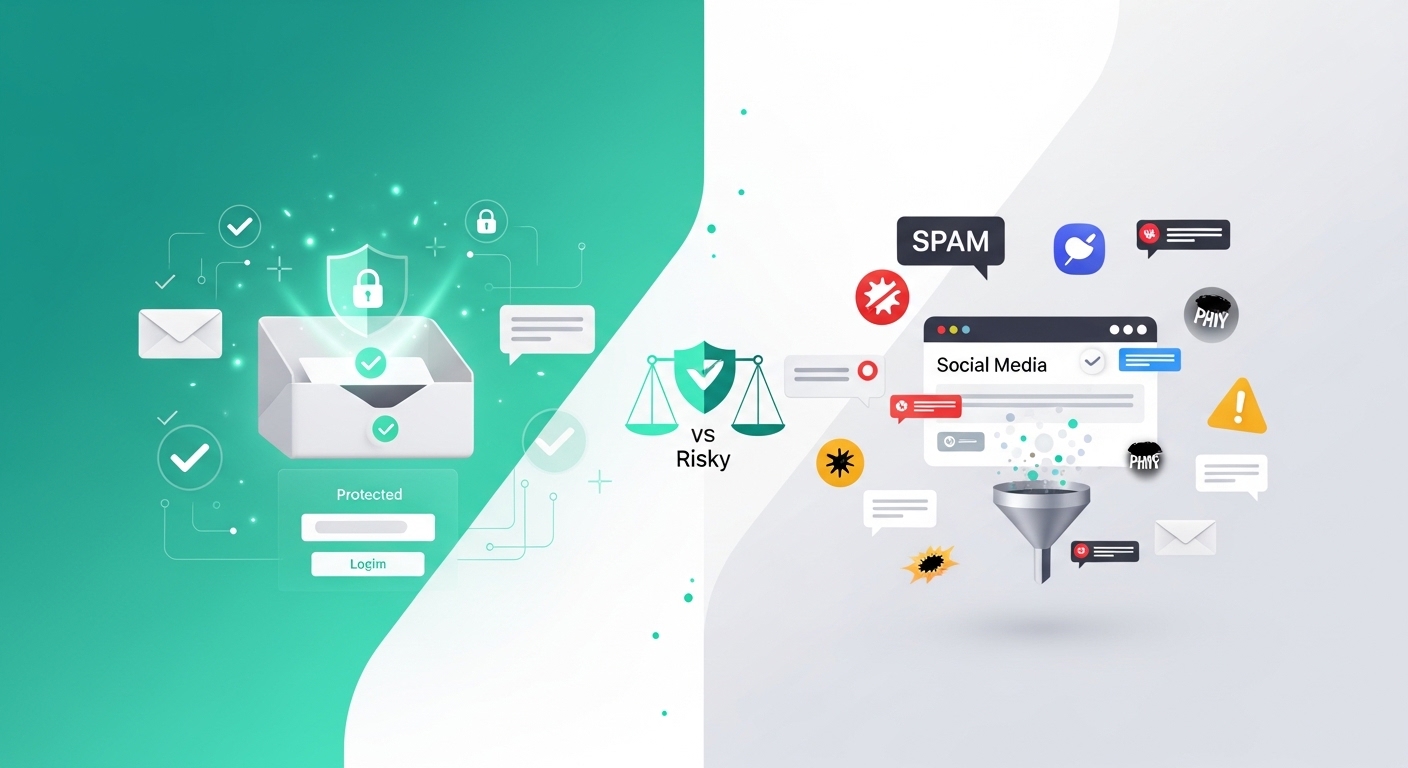
Temporary Email for Social Media Signups: Safe or Risky?
Temporary Email: What’s the Point?
Temporary email, or disposable email, helps one easily create a short-term email address. The purpose of the email address is for use during online sign-ups. With a temporary email, one can circumvent the problem of giving away their real email address. It is a time-saver that helps one maintain their anonymity while checking online services in a safe way. This helps avoid giving away their real email address.
Besides the time that can be saved, there are many real-world applications of temporary email services. The set up for an email from a disposable email company is easy. This is a time saving option, as some services can take time to set-up and still require an email sign-up.
Offering a temporary email address, one can stop spam at the source. Their inbox will be free from spam. By giving a temporary email address to a website that they suspect will sell their email to get rich quick, they can browse the website without worrying. They'll no longer be bombarded with emails, no new promotional emails 등 to worry about.
One of the lesser-known security benefits of a temporary email address is the ability to avoid phishing scams and data breaches. Keeping a disposable email address to sign up for services protects your personal email and adds another layer of defense. Users also remain safer from data breaches and phishing email scams to those addresses, as disposable emails become permanently deleted or remain unused.
Utilizing Temporary Emails for Social Media Accounts
Keeping your personal details safe, especially from social media, is important, and this is the age of the internet. Use of temporary emails provides benefits socially and maintains privacy.
The most important temporary emails benefit is the ability to stop spam from flowing into your inbox. Some services even take it to another level and sign you up for giveaways and sweepstakes based on your temporary email. Regardless, users email inboxes can become filled with promotional, especially unsolicited, spam emails. When using a temporary email, users can sign up for a social media account without the abrupt spam. When the email has served its purpose to the users, they can delete the email address. Once a temporary email account serves its purpose, users don’t have to put up with spam and can avoid the risks of having a spam email.
A bonus of using temporary email to sign up for social accounts is increased anonymity and a higher level of privacy. A lot of spam is request emails asking for personal details. If a service requires a permanent email to fulfill the signup, users can avoid using it, especially to steer clear of potential spam and unsolicited. Those having privacy concerns using temporary emails to enter some social networks can use those temporary emails.
Additionally, disposable emails let a user delay the commitment to an email service. Where a conventional email account requires a continuous subscription or a drawn-out signup, disposable emails can be set up quickly with instant removal. This design of delay appeals to users with an aversion to a particular form of social media, or to users with a more exploratory profile with actual account diversity.
All in all, the temporary use of emails when signing up to social media creates a more light-hearted and less venturesome interaction. Temporary email has drastically improved the concerns of unwanted emails, protecting one's identity, and offering differently levels of access with ease, thus allowing the more modern user, the answer to their web-evolving needs.
Temporary Emails: Risks and Detriments
In signing up to social media with a disguise email, users should weigh the temporary emails’ salient detriments and the risks they pose to users. Users particularly show concern when they realize that they have obstacle in the recovery of their account. Disposable emails that pose as a ancier temporary email account is a wise choice for the social media site. Once all purpose has expired, and the email is no longer of use, retrieving account access is all but impossible. Users will lose access to the social media account.
Using temporary emails on social media platforms could result in serious issues, including being flagged for breaches of terms and conditions. Social media apps operate a zero tolerance policy when it comes to users creating accounts with temporary or disposable emails. This is treated as a form of manipulation or fraud, and in the event an account is created to operate an email address of this sort, the account runs the risk of being suspended or simply being wiped out entirely.
Surprisingly, the possibility of having accounts suspended increases even further when temporary emails are involved. If a social media account is created alongside a temporary email and that email is completely temporary, the chances of being able to recover that social media account becomes zero. This is dangerous for users who may have vital or career-related information left on that social media account. Lastly, disposable email systems may further contribute to social hackers by extending avenues of cracks on a social media platform. This may extend avenues for social hackers to partake in social fishing.
In summary, temporary emails may pose a false sense of privacy, and these concerns may pose a larger problem. It's only logical that these concerns are examined involving the use of disposable emails on social platforms.
Tips for Using Temporary Emails Securely
Temporary email can be good for making email sign-ups easier while protecting your email from collection while signing up for social media accounts. Temporary email services can be used in many ways, but privacy and security should be a first concern. First, you should be able to select your temporary email services from a company that has a good reputation. There are many companies that prioritize the security of their users by providing security on their site and a clear end-to-end privacy policy. There are many risks that can be minimized by signing up for a temporary email that decreases the risk of massive data breaches and companies that do not consider the security of your email and do not offer user-initiated protection regarding the server email that they compromise and then unable to revert on that email account with all data.
You should be cautious regarding the information regarding submitting and social media accounts. Do not provide email accounts and hyperlinks to your email accounts for social media accounts that require personal sensitive information such as health and banking accounts. When you have an account that is needed for the account to be created, these accounts will help a lot. They may not require personal information and you may not have to create an account to subscribe to them.
Knowing the management of your bastards or accounts leans heavily to the temporary email. These accounts are created particularly by email accounts that are anonymous and are closed. Some options are, if needed, you may create an account for the company with a user ID and email and glue on a temporary email and a temporary email leans heavily on that account. Scattering these companies and their temporary social media accounts will help minimize the possibility of too many users creating accounts on a single system, system or unknown system, and controlling them.
In conclusion, users should examine the advantages and disadvantages of temporary emails before choosing this option. This approach may eliminate the risk of spam and anonymous registration; however, they can make account recovery and verification more difficult. They should consider this information seriously to understand where they stand in relation to their online privacy.